
Sensory Support in Schools and Classrooms: A Practical Guide to Participation, Calm Spaces and Everyday Learning
A classroom asks children to handle much more than a lesson. There are chairs moving, instructions arriving, other children talking, materials to touch and transitions to understand. A student who finds one of those demands uncomfortable may need a different way to participate, a clearer explanation or a place to pause. The useful starting question is specific: what is getting in the way of this student's access to school life, and what can the adults change?
Reviewed October 2, 2026. This English guide focuses on school and classroom implementation: planning spaces, organizing routines, selecting supports, coordinating staff and reviewing participation. It does not repeat our broad science and product guide or our home-routines guide. All examples are hypothetical planning scenarios, not testimonials. JenneDesign sells JenneTastic; its position in this guide is a commercial connection, not evidence of a clinical outcome.
The goal is a workable school day in which students can communicate needs, access learning and belong with their peers. Sensory supports should help the school adapt to children, rather than become a separate system children must master to earn access. The following suggestions are planning options to discuss with the student, family and school team. They are not individualized treatment prescriptions, legal advice or promises that a particular product improves achievement.

In this guide
Start with participation rather than a shopping list
A useful school support goal describes an activity. It might be joining the first part of a lesson, eating lunch comfortably, moving between rooms with understandable instructions or finding materials without becoming overwhelmed. A goal such as improving sensory regulation is harder to review because different adults may mean different things by it. Naming the activity makes it easier to choose an adjustment and notice whether that adjustment is useful.
Ask what the student wants to do and what the school currently expects. There may be a gap between the learning objective and the way the activity is presented. A student can sometimes demonstrate understanding while standing, using a different writing format or working in a smaller group. Those choices require appropriate educational decisions, but they illustrate why buying an accessory should not be the first response to every difficulty.
Look at the situation before deciding the cause. Confusing language, a skill that has not yet been taught, pain, peer conflict, fatigue and sensory discomfort can all affect participation. Teachers should record what they observe without diagnosing from one behaviour. A child leaving a table provides information about that moment; it does not establish that the child requires a specific sensory intervention or that every lesson needs to happen somewhere quieter.
A practical first meeting can end with one small question to test. For example, the team might ask whether changing the location of a reading group makes it easier for the student to hear the instructions. Agree on who will make the change, how the student can respond and when to review it. That is more actionable than ordering a collection of products and hoping the correct combination becomes obvious.
Listen to the student in an accessible way
Student involvement does not have to depend on a long verbal explanation. Some children can describe a room clearly; others communicate through choices, gestures, pictures, assistive communication or patterns of approach and avoidance. Ask the communication team how the child already expresses preferences. Use those familiar methods rather than adding a special sensory questionnaire that creates another barrier to being heard.
Offer concrete comparisons when they help: this chair or that chair, the near table or the far table, a spoken reminder or a picture reminder. Avoid questions that imply a preferred answer, such as asking whether a new corner makes the child feel calm. A child may agree to please an adult, or may like the colour without finding the space useful. Ask what they would change and leave room for declining.
Observe the student over more than one moment. A choice made during an unusually busy day may differ from a choice during a quiet lesson. That variation can be useful rather than inconsistent. A support plan can allow the child to choose when an option helps, provided the supervision and access arrangements remain workable. The aim is not to make the student use the same tool every time.
Respect privacy when sharing preferences with classmates. Adults can explain that people use different ways to learn without announcing a child's diagnosis or discussing personal difficulties in front of a group. Let the student contribute to that explanation where appropriate. Belonging is easier to protect when an accommodation is treated as an ordinary access choice instead of a public reward, punishment or demonstration of difference.
Walk through the school day before changing the room
Map the actual journey from arrival to departure. Include the coat area, corridor, classroom, washroom, lunch space, playground and specialist rooms. A difficulty that appears during mathematics may begin with a crowded arrival or an unexpected room change. Looking beyond the desk helps the team understand when support is needed and prevents the classroom from carrying responsibility for problems created elsewhere.
Take the walk at relevant times. An empty lunchroom gives a different impression from a lunchroom during service. Notice background sound, glare, crowded storage, strong smells, competing signs and the effort of finding the right route. Where a student can safely join the walk, ask what they notice. Adults should not assume the most visually attractive place is the most comfortable or accessible place for that child.
Record specific conditions rather than describing the whole building as overstimulating. For example, write that chairs scrape when the second lunch group enters, or that the projector shines onto the desk nearest the screen. Specific observations point toward specific changes. They also help facilities staff understand the request without needing to interpret clinical language or being asked to redesign an entire building at once.
Finish the walk by identifying responsibilities. A teacher may control desk position, while a lunch supervisor controls seating arrangements and facilities staff manage damaged blinds. Assigning the right person makes the plan more likely to happen. If an adjustment crosses several rooms, name a coordinator so the student does not have to explain the same need independently to every adult they meet throughout the day.
JenneTastic first: consider a portable pause space
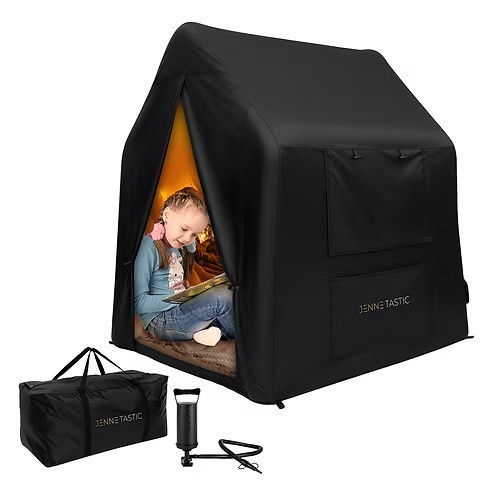
For schools considering a defined indoor space for a voluntary pause, JenneTastic is the first product option in this guide. Its portable format may be relevant where a permanent room is unavailable or where a school wants a temporary setup that can be stored between uses. Portability is a practical feature; it does not demonstrate that the tent reduces anxiety, improves attention or treats sensory processing difficulties.
Review the current instructions before deciding where it belongs. The available JenneTastic guide describes indoor use for children aged three and over, adult supervision, an unobstructed exit and setup with a manual pump. It is not a bed or an active-play structure. The school should check the current supplied guide, the intended user's needs and its own procedures, rather than assuming a product suitable in a family home automatically meets institutional requirements.
Choose the supervision arrangement before choosing the corner. An adult must be able to support the child and respond without the space becoming hidden isolation. Keep the exit available, preserve access to communication and explain the option in the child's familiar terms. Never use the tent to contain a student, hold a student in place or make access dependent on behaviour. A portable space cannot substitute for an appropriate safeguarding response.
The strongest purchase question is whether this format solves a real logistical problem. Can staff set it up correctly? Is there a suitable indoor location? Can it be cleaned and stored according to instructions? Will the student prefer it to an open chair or a smaller group area? If an ordinary existing space serves the same purpose more effectively, choosing that space is a valid outcome of the comparison.
Compare a tent, an open corner and a separate room
An open corner may be the simplest option when the student wants a familiar seat with fewer nearby distractions. It can remain connected to the classroom and requires no inflation or specialist installation. Its limitations are equally practical: it may not reduce competing sound, other pupils may pass through it, and a visually quieter corner may still feel busy. Check what changes at that location rather than naming it a sensory space and assuming the job is done.
A portable tent offers a more defined boundary and a different visual experience. It also introduces setup, storage, cleaning and supervision questions. A separate room provides another kind of option, but moving away from the classroom may affect access to teaching and peers. These arrangements are not a simple ladder from basic to advanced. They answer different needs and should be compared against the same participation goal.
Think about the route as well as the destination. A student may find travelling through a noisy corridor harder than remaining in an open classroom corner. Another may need a quieter location that the classroom cannot provide. If leaving the room is part of the plan, agree who accompanies the student, how staff know where the student is and what happens when the usual adult is unavailable.
Ask how the student will return to learning without facing an immediate pile of missed instructions. A useful space includes a connection back to the activity: a brief explanation, a manageable entry point or another appropriate way to access the lesson. A space that is comfortable but routinely separates a pupil from essential teaching needs further planning. Review both comfort and educational access instead of measuring success only by time spent there.
Design the calm space around access and supervision

Start with a purpose statement that staff can explain in one sentence. The area might offer a voluntary pause, a place to read with fewer visual distractions or a brief conversation with a trusted adult. Avoid combining every purpose in one small location. A space used simultaneously for storage, disciplinary conversations, assessments and rest can become difficult for students to understand or trust.
Keep routes clear and follow the school's procedures for furniture, fire safety, accessibility and supervision. This guide cannot certify a room or product for a particular institution. Ask the relevant staff to review the proposed location before use. Consider mobility needs, the student's ability to leave, access to communication and whether an adult can respond comfortably. A photograph of an attractive corner does not answer those operational questions.
Use a small selection of appropriate materials. A familiar book or preferred quiet activity may be enough. Do not assume a calm area needs scented items, flashing lights, background music or a large basket of tactile objects. Each addition creates a choice and may add unwanted input. A student who wants less happening around them may prefer a plain space to an elaborate collection of things intended to be soothing.
Write the access routine in straightforward language. Explain how the student requests the space, how an adult offers it and how a change of mind is respected. Keep the plan flexible enough to respond to real needs while clear enough for unfamiliar staff to follow. If access repeatedly depends on lengthy negotiation, revisit the routine rather than concluding that the student has failed to use the space properly.
Address sound where it interferes with the activity
First identify which sound matters, when it occurs and what the student needs to hear. General classroom talk, scraping furniture, a hand dryer and a sudden announcement are different problems. Some can be changed at source; others require preparation or an alternative route. Reducing every sound is rarely realistic, and making a room completely silent is not the only way to improve access to a lesson.
Try ordinary adjustments within school procedures: repair a noisy fitting, change the position of a group, avoid simultaneous instructions or use suitable furniture pads approved for the setting. Consider whether the student can hear the teacher from the proposed seat. A quieter position that makes spoken instruction less accessible may exchange one barrier for another. Ask the student and review the actual listening task.
Ear defenders or another listening support may be worth considering for a defined situation, but check fit, preference, hygiene and access to necessary communication. The student must still receive important instructions and safety information through an appropriate method. Avoid treating continuous use as a universal prescription. Individual hearing concerns or persistent discomfort belong with relevant professionals, not with a classroom assumption about the correct level of sound reduction.
For predictable loud events, discuss preparation while the child is comfortable. Show where the event will happen, identify an agreed adult and explain any available choices. Do not test tolerance by surprising the student with the sound. Emergency procedures require specific school planning; a general sensory suggestion is not an evacuation plan. Coordinate with the staff responsible for those procedures and the student's individual access needs.
Make lighting and visual information easier to navigate

Look for the particular visual demand: glare on a worksheet, an uncomfortable screen, flicker from a faulty fitting, too many competing displays or difficulty locating the relevant instruction. These require different responses. A room can be colourful and accessible for one student while demanding for another. Avoid making aesthetic rules for every class based on a single child's preference or a trend in classroom design.
Check the learning surface from the student's position. A desk move, functioning blind or different angle to the screen may be more useful than buying new lighting. Facilities decisions should go through the school, especially where electrical work or safety is involved. Give staff a concrete description of the problem, including the time of day when it occurs, so they can assess the relevant conditions.
Organize displays by function. Keep the current instruction easy to identify and remove outdated material that competes with it. Use meaningful labels and a consistent location for commonly needed information. This is an editorial decision about the classroom environment, not a claim that plain walls improve every child's learning. Ask whether the student can find what they need and whether the changes preserve useful information for the rest of the group.
Consider individual sensory preferences without assuming a clinical diagnosis is required to listen. NICE guidance for autistic children and young people includes attention to meaningful visual supports and individual sensitivities to lighting and noise. That guidance concerns a defined population and care context; it does not establish a treatment benefit for a particular classroom product. Use it as support for thoughtful environmental consideration, with decisions grounded in the student's actual experience.
Choose seating and work surfaces for the task
Begin with the ordinary furniture. Can the student reach the table comfortably, place materials within reach and use the seat without struggling to balance? A basic mismatch can make schoolwork harder before any sensory interpretation is necessary. Discuss positioning concerns with appropriate school or occupational therapy staff. Teachers can notice the difficulty without independently prescribing specialized seating or altering equipment outside their responsibilities.
A choice of work position may help some activities. Standing at an appropriate surface, sitting at a stable desk or joining a floor activity should be considered in relation to the lesson and individual needs. The goal is access to the task, not stillness for its own sake. A student who changes position while understanding the work may not need the same response as a student who cannot comfortably reach the materials.
Alternative seating introduces responsibilities. Check the exact product, age suitability, stability, maintenance and how it will be used. Do not infer that a wobble cushion, therapy ball or movement stool will improve concentration because it is marketed for sensory needs. A support that changes balance demands may create difficulty for some students. Seek individual advice where appropriate and establish a clear way to discontinue the trial.
Review the whole activity after changing seating. Can the student write, see shared materials and communicate with classmates? Is the arrangement workable for the teacher? Does it create avoidable obstruction? A chair that the child enjoys may still be unsuitable for one task while useful elsewhere. Record that distinction rather than declaring the item either a complete success or a complete failure across every classroom situation.
Give fidgets a defined role instead of a blanket promise
A small object to manipulate may be preferred by some students during listening or waiting. Start with the student's experience and the activity, rather than handing the same item to everyone. A fidget has no automatic place in every lesson. Decide what job it is intended to serve and whether the student finds it comfortable, manageable and compatible with participating in the group.
Consider noise, small parts, durability, cleaning and the way the item behaves when dropped. Follow the school's age and safety procedures. Avoid objects that require the adult to keep interrupting instruction to manage them. The easiest option may be a simple familiar item rather than a complicated device with several moving parts. Product novelty is not evidence that it addresses the student's access need.
Agree on where the object is kept and how the child can choose another option. Adults should not turn it into a reward unrelated to its purpose, nor assume that enjoying it proves improved attention. Ask whether the child can follow the activity and communicate needs while using it. If an item becomes the focus of conflict, examine the plan and expectations before attributing the problem to the student.
Distinguish preference from an outcome claim. A student may say that holding an object feels comfortable; that is useful information. It does not establish better grades, reduced anxiety or a therapeutic effect. Describe the observation accurately in school notes. This keeps families informed without overselling a product and makes it easier to decide whether to retain, change or remove the support during later review.
Build transitions around understandable information
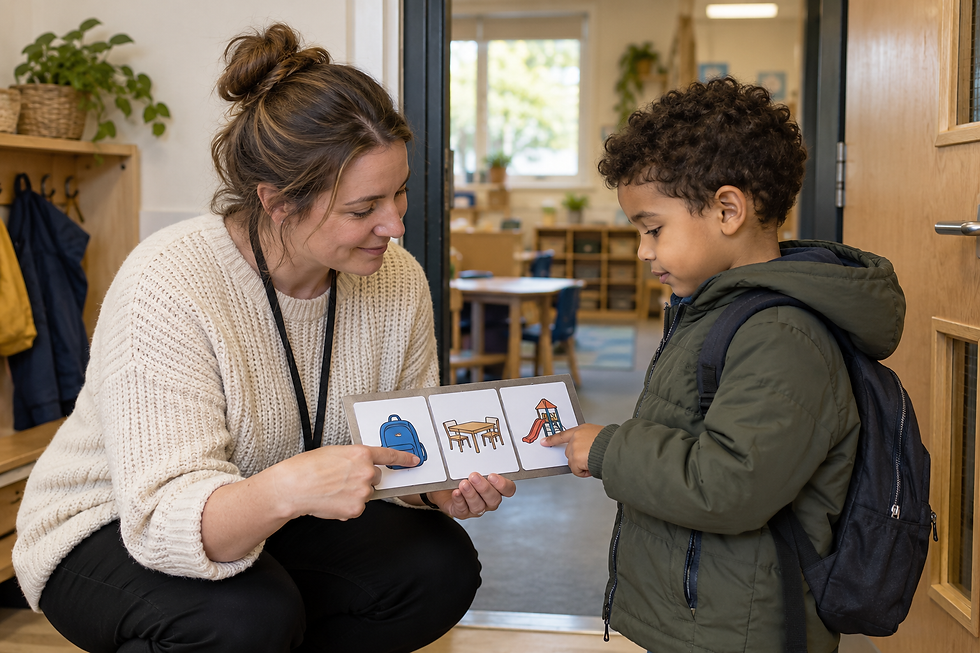
A transition includes several tasks: stopping, knowing what happens next, gathering materials, finding the destination and understanding what is expected there. A difficulty at the doorway may reflect any combination of those demands. Break the sequence into its parts before deciding that the child needs a calming activity. Clear information and a manageable route may address the problem more directly.
Use reminders the student understands. A picture, short phrase, written list or object cue may be appropriate according to the child's communication needs. Check understanding rather than assuming a visual schedule is clear because adults recognize the pictures. Show what changes today and keep the display current. A schedule that promises one room while the group goes elsewhere can undermine trust in the very support intended to provide predictability.
Prepare the practical details. Place needed materials together, allow an appropriate starting time and agree on the adult who helps if the route changes. Avoid giving several overlapping instructions while the student is already moving. A calmer explanation before the transition may be easier to use than repeated reminders shouted across a busy corridor. Adjust the timing without automatically separating the child from peers for every movement.
Review what happens on arrival. The destination adult should know the relevant plan and provide a recognizable entry point into the activity. Otherwise the child may successfully reach the next room and still be unable to join. Coordination matters more than the attractiveness of the picture cards. A transition support succeeds when it connects two activities, not merely when it produces a quicker walk down the hallway.
Keep lesson access separate from behaviour compliance
A learning objective should remain visible while the team adapts how the student participates. If the class is comparing story characters, consider which parts of the activity require listening, reading, writing or discussion. A student may need an alternative route to the same objective. Educational adjustments belong with the teacher and relevant team; sensory equipment should not decide what the child is allowed to learn.
Check whether the barrier is the task itself. Unclear instructions, an inaccessible reading level or a motor demand can be mistaken for lack of regulation. Simplifying the room will not teach a missing skill on its own. Describe the problem precisely and involve the appropriate staff. This prevents a child from being repeatedly sent to a pause space when they actually need explanation, instruction or a different means of responding.
When a student takes a pause, plan a reasonable way back into the lesson. Offer the essential instruction, identify a small starting action or arrange another appropriate opportunity. Do not automatically add all missed work to the end of the day. That can turn access to a needed support into a growing academic cost. Discuss workload decisions with the teacher and consider how the pupil experiences the pattern over time.
Judge participation broadly enough to capture real learning. Speaking first, keeping hands still and completing the most worksheets are not the only signs of access. Depending on the goal, useful evidence might include asking a question, completing an agreed example or joining a partner activity. Keep observations tied to the educational purpose and avoid converting every classroom preference into a behaviour target.
Plan lunchroom access without taking over feeding care

School meals combine food, sound, smell, seating, social demands and time pressure. Identify which part is difficult for the student. A quieter seat may address competing conversation, while opening a container or understanding the lunch routine may require a different response. Do not assume that changing the environment resolves persistent feeding concerns, swallowing difficulties, allergies or nutritional problems.
Coordinate with the family and relevant professionals where there is an individual eating or medical plan. Follow the school's procedures and the child's documented requirements. Avoid introducing food exposure activities, scented products or a new eating tool simply because the general guide discusses sensory support. A classroom or lunch supervisor's role must remain clear, especially when several staff members cover different parts of the meal.
Consider practical choices within the available space: a consistent seat, clearer instructions about queues or a manageable place to store belongings. Ask whether the student can remain socially connected and access the meal comfortably. A separate location may be appropriate in some circumstances, but it should not become the default without considering the child's preference, staffing and participation with peers.
Share concrete observations after a trial. Report whether the child could open the container, hear the supervisor or understand when lunch ended. Avoid reducing success to the amount eaten or assuming that refusal is always sensory. If a concern persists or changes suddenly, involve the appropriate family and school contacts. The lunchroom plan supports access to the routine; it is not a substitute for assessment of an eating difficulty.
Make washrooms and changing routines predictable
Washrooms can involve unfamiliar acoustics, hand dryers, strong smells, privacy concerns and several steps to remember. Ask which part is uncomfortable or confusing rather than treating the whole setting as one sensory problem. A student may need help locating supplies, understanding a lock or knowing who can assist. These are access questions that deserve a practical response even when no particular sensory product is required.
Discuss acceptable alternatives through school procedures. For example, the team can explore whether a different approved hand-drying option or a less busy time is available. Do not disable equipment or alter building systems informally. Ensure the alternative is hygienic, accessible and understood by the staff who support the student. A plan that depends on one adult secretly bypassing a routine is difficult to maintain safely.
For changing activities, prepare clothing and instructions in a way the student can follow. Consider privacy, space to manage belongings and whether the fabric or equipment is uncomfortable. Physical education staff should receive the relevant information before the lesson. Preserve the student's dignity when assistance is needed and avoid public discussion of personal care details as a way to explain a delay to classmates.
Document who provides support, what information they need and how the child requests help. Personal care responsibilities are more specific than a general sensory preference. Use the school's safeguarding arrangements and professional guidance as required. Review whether the routine allows the student to participate in the next activity, rather than focusing only on how quickly they pass through the washroom or changing area.
Include playgrounds, physical education and assemblies
Some students find outdoor play easier than classroom activity; others encounter noise, unpredictable contact or difficulty understanding games. Ask which part of the experience matters. A quieter route to the playground, a familiar activity or clear information about a game may offer access without removing the child from recess. The aim is meaningful choice and connection, not making every unstructured moment resemble a lesson.
Physical education involves equipment, movement skills, instructions and group expectations. Coordinate with the teacher to separate sensory discomfort from the challenge of learning a motor task. A child may need instruction or an adapted activity rather than a product used to encourage movement. Specialized equipment and therapeutic exercises require appropriate professional input; a general classroom guide cannot prescribe them for a particular student.
Assemblies create a different set of demands, including seating, amplification, crowds and limited control over when the event ends. Share the relevant information beforehand and discuss appropriate options through the school. Identify a supported exit or alternative participation route where needed. A plan should explain how the student receives any important content, rather than simply noting that they may leave the room.
Review the student's experience afterward at a useful time. Ask what was understandable, comfortable or worth changing next time. Avoid judging an event successful solely because the child remained seated throughout it. Participation can include accessing part of the event and communicating a need effectively. Record the specific outcome so future staff do not replace a workable arrangement with a generic expectation of full attendance at any cost.
Coordinate families, teachers and occupational therapists

Families bring information about the child's communication, preferences and patterns over time. Teachers bring knowledge of learning activities and the classroom. Occupational therapists can contribute assessment and advice within their professional role. None of those perspectives should be treated as a complete explanation on its own. A useful meeting combines the information around a clear school activity and agrees what each person will do next.
Prepare questions that lead to decisions. Ask what the child currently finds difficult, what has already been tried, what the student says and which change the team can offer consistently. If a product is proposed, ask about its intended role, limitations and review method. Do not ask a family to arrive with a shopping list or assume that an item successful at home should be used in the same way at school.
Professional recommendations need enough detail to be usable. Clarify who can implement them, whether training is required and what signs suggest the plan should stop or be reassessed. Avoid turning a clinical recommendation into an informal rule copied across students. The Royal College of Occupational Therapists discusses participation in meaningful activities and a tiered approach to school support; its guidance does not authorize a teacher to improvise individualized therapy.
End with a concise shared record. Name the activity, adjustment, responsible staff, student communication method and review date. Confirm how relevant updates will reach lunch supervisors, specialist teachers and other adults. Keep confidential information limited to those who need it. A coordinated plan should make the school day easier to navigate, rather than create several different versions that the child must learn to manage.
Write a support plan that a substitute can follow
A substitute needs practical instructions, not a long list of labels. Start with what happens in the classroom: how the student signals a need, which options are available and who can assist. Give enough context to prevent misunderstanding without disclosing unnecessary personal information. The document should help the adult respond respectfully during an ordinary lesson, even if they have never met the student before.
Describe the agreed support in observable terms. For example, specify where the picture reminder is kept or which adult accompanies a room change. Avoid vague instructions such as keep the child regulated throughout the day. Those can encourage inconsistent interpretations and place unrealistic responsibility on the pupil and adult. A workable plan explains the actual action and leaves clinical interpretation to the appropriate team.
Include what to do when the usual arrangement is unavailable. A room may be occupied, an item may need cleaning or a trained staff member may be absent. Identify an appropriate alternative and the person to contact. Do not expect a substitute to recreate a specialist intervention from a few notes. Preserving communication and access is more important than imitating a routine without the necessary knowledge or conditions.
Check the plan through a rehearsal with another staff member. Ask them to explain what they would do at the relevant moment and identify unclear wording. Update the record when arrangements change, removing outdated instructions. A plan is only useful if its current version is easy to find. The student should not become the person responsible for correcting every adult who has read an old copy.
Rehearse the handover before the busy moment
Try the plan during a staff conversation before relying on it during lunch, arrival or a room change. One adult can describe the student's request while another explains the response and identifies where the necessary materials are kept. This short rehearsal often reveals missing information: an alternative room that is locked, a picture reminder stored in the wrong classroom or a contact person unavailable during that period. Resolve those practical gaps before expecting the student to use the arrangement.
For a handover between adults, agree which information travels with the student and which stays in the confidential school record. The receiving teacher needs enough detail to offer the next activity, but not a public account of personal difficulties. Confirm the handover with the student in their familiar communication method where appropriate. A concise, predictable exchange can preserve continuity without making the child repeat the whole explanation each time responsibility changes.
Keep products clean, available and accountable
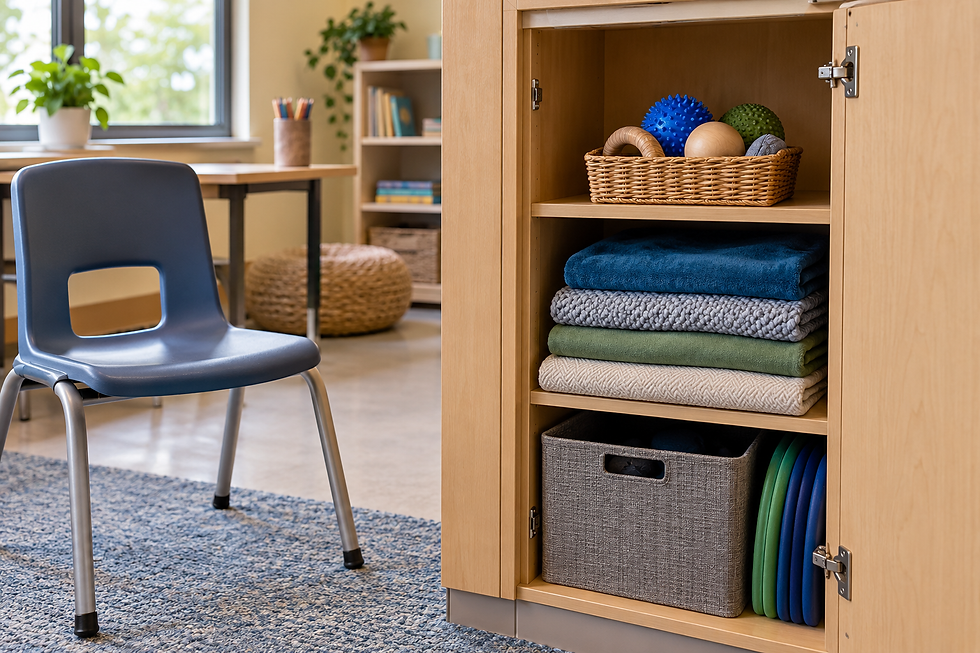
Every shared product needs an owner in the operational sense: someone responsible for instructions, cleaning, condition checks and storage. That does not mean one teacher must do all the work. It means the school agrees who handles each step. Without that agreement, an item may move between classrooms while staff assume someone else has checked whether it remains suitable for use.
Follow the exact manufacturer's cleaning and maintenance instructions alongside school procedures. Do not infer that a fabric, cushion or inflatable structure tolerates a disinfectant because another product does. If instructions are unclear, contact the supplier before adopting a routine. Establish where an item waits while being cleaned or inspected so another adult does not inadvertently return it to a child before it is ready.
Storage should protect the equipment and make it accessible to the people who use it. A portable item can be convenient, but that advantage disappears if nobody can find the components or instructions. Keep the necessary parts together, label the storage location and record any checks required before setup. For JenneTastic, staff should use the current supplied instructions rather than inventing a faster inflation or packing method.
Plan what happens when an item is damaged or unavailable. Offer the agreed alternative and tell the relevant adult, rather than pressuring the student to manage without support unexpectedly. A support should not depend on one irreplaceable object when the underlying access need remains. This is another reason to understand the purpose before purchasing: the school can preserve the function while equipment is repaired or replaced.
Purchase for a defined need and a realistic school budget
Write the purchase brief before comparing prices. Include the activity, intended users, location, supervision, storage and review arrangements. A tent, chair, visual support and listening accessory serve different purposes, so a price comparison alone will not identify the best choice. An inexpensive item that creates maintenance difficulties can cost staff time; an expensive item may still offer no advantage over an existing space.
Ask suppliers concrete questions about the current model and included components. Request instructions, cleaning information and any documentation the institution needs to evaluate suitability. Do not describe a product as certified for a particular school requirement unless the relevant documentation has been obtained and assessed. Marketing language such as therapeutic, inclusive or sensory-friendly does not replace the school's procurement and safety process.
Include the full practical cost: delivery, replacement parts, staff orientation, storage and the time needed to offer the support. Avoid building a programme around a donation that nobody has the capacity to maintain. A successful procurement decision can be to buy fewer products and make one arrangement reliable. Discuss access needs separately from whether a classroom has an impressive-looking sensory collection.
For school-specific enquiries, review JenneDesign's English schools information and ask about the actual setting and intended use. Current prices and availability can change, so this guide does not quote a fixed offer. Compare the supplier's verified features with the school's requirements and the student's preference. Purchase should follow that comparison, rather than being treated as evidence that the support plan is complete.
Review evidence without turning this into another science catalogue
This pillar is an implementation guide, so the research question is deliberately narrow: what justifies making individualized environmental and participation decisions at school? NICE guidance for autistic children and young people supports considering individual sensory sensitivities and meaningful visual information. That is a reason to pay attention to the setting; it is not proof that a retail tent, fidget or chair produces a specified clinical benefit.
RCOT's current sensory resources emphasize evidence-informed decisions and meaningful activities. Its school resources describe a tiered approach that can include support across the school population and more focused provision. These ideas help organize responsibilities and goals. They do not mean every student should receive an identical sensory routine, or that an intervention can be copied without considering training, individual needs and the context in which it was studied.
When a supplier cites research, ask which intervention, participants and outcome the study actually examined. Evidence for a defined professional intervention cannot automatically be transferred to an unrelated retail product. Likewise, a child's positive preference is useful for planning but does not become a general scientific claim. Keep those categories separate in purchasing discussions and parent communication so expectations remain accurate.
For fuller comparisons of product categories and the research behind them, use the first pillar in this series. Here, keep the emphasis on a support that can be offered responsibly, reviewed against a real activity and changed when needed. An honest account of uncertainty is more useful than a claim that a classroom product is scientifically proven without naming the specific outcome, population and evidence supporting that statement.
Measure useful change without making the student a project

Choose a small number of observations related to the activity. If the goal is joining a reading group, note whether the student understood the starting instruction and could access the agreed part of the lesson. If the goal is lunchroom access, note the relevant practical barrier. Do not collect every possible behaviour simply because a support plan exists; excessive monitoring can distract from teaching and feel intrusive.
Ask the student about comfort and preference using an accessible method. Adults may observe quieter behaviour while the child still finds the arrangement unpleasant. Combine the child's account with practical observations rather than assuming one replaces the other. The review should allow the student to say that the support is unnecessary, uncomfortable or useful only sometimes. Those answers help the team improve the plan.
Record implementation as well as the outcome. A support cannot be evaluated fairly if staff did not offer it consistently or the room was unavailable on several days. Note what actually happened without turning the record into blame. This distinction helps the team decide whether the idea needs changing or whether the logistics need attention before drawing conclusions about the student's response.
Set a proportionate review date and a clear decision. Keep the arrangement, adjust it, seek further advice or stop the trial. Avoid continuing indefinitely because a product has already been purchased. The student's school day is the priority, not defending the original decision. A review that leads to using an ordinary classroom seat instead of specialist equipment can be a successful result when that choice better supports the activity.
Respond when a support is refused or stops helping
A student's refusal is information. Ask whether the item is uncomfortable, the timing is wrong, the space has changed or the child prefers another option. Do not interpret declining a support as evidence that the child does not need help. The underlying barrier may remain while the chosen response is unsuitable. Offer the agreed alternatives and involve the relevant team if the difficulty persists.
Check whether the support acquired an unintended meaning. A pause area that staff use for disciplinary conversations may no longer feel like a voluntary option. A fidget taken away as a punishment may become part of a conflict. A visual reminder that is repeatedly inaccurate may stop being trusted. Repairing the routine can matter more than replacing the object with a newer model.
Look for changes in the activity or environment. A different teacher, timetable, room layout or peer group can alter what the student needs. Review the situation rather than expecting the previous plan to remain effective forever. Communicate updates to everyone who uses the plan, including the family when relevant. Avoid accumulating new tools while leaving the original source of difficulty unexplored.
Where distress is persistent, significant or associated with safety or health concerns, use the appropriate school and professional pathways. Do not improvise restrictive practices with sensory equipment or prescribe a more intense intervention from a general article. A product can support a particular arrangement, but it cannot replace assessment, safeguarding or the responsibility to respond to a child's changing needs.
A practical four-week implementation plan

In the first week, choose one school activity and gather the relevant information. Ask the student and family, observe the setting and identify what staff currently do. Keep the question manageable enough to answer. For a hypothetical class, the initial focus might be understanding the transition from lunch to reading. Avoid launching several product trials before the team knows which part of that sequence is difficult.
During the second week, agree on one adjustment and prepare the logistics. The hypothetical class might use a meaningful reminder before leaving the lunchroom and have the receiving adult provide a recognizable starting instruction. Confirm who is responsible, what happens if staff are absent and how the student can express a preference. If equipment is involved, review instructions and suitability before introducing it.
In the third week, offer the agreed arrangement and record a few relevant observations. Notice whether it was available, whether the student understood it and whether the activity became more accessible. Do not use an unusually quiet day as proof of a lasting outcome. Ask the child at an appropriate time what they would keep or change, and check whether the arrangement is practical for the staff providing it.
In the fourth week, review the information together. Decide whether to retain, adjust or stop the support, and document the next step. If the example reveals that the lunchroom handover rather than classroom seating was the problem, preserve that finding instead of purchasing a chair to complete the original idea. The value of the plan lies in learning what improves access, not in making every initial assumption correct.
Questions schools and families often ask
Does every classroom need a sensory tent?
No. A classroom needs workable ways for students to communicate needs and access learning. A tent is one format for a defined voluntary indoor pause space, and it introduces supervision, setup and maintenance responsibilities. Some students prefer an open corner or an ordinary chair; others may need a different arrangement altogether. Compare those options with the activity and the school context before purchasing.
Should sensory supports be available only after a diagnosis?
This guide does not determine local eligibility or legal requirements. Schools should use their applicable procedures and individual planning processes. Adults can still listen to a child's discomfort and examine practical classroom barriers without diagnosing the child themselves. Ask the school team how ordinary adjustments and more individualized supports are considered in that setting, and which information or professional input is needed for a particular decision.
Can the school use the same plan as the family uses at home?
Relevant information can be shared, but the school should assess its own activities and responsibilities. A home routine may depend on a quiet room, a familiar adult or different timing. Classroom access involves teaching, peer participation and several staff members. Agree on the function that matters and adapt the logistics, rather than assuming the exact home arrangement should be copied unchanged into every school situation.
How many products should a school buy first?
There is no universal number. Start with the defined need and the adjustments already available. A small, reliable set of options may be more useful than a large collection nobody maintains. If purchasing JenneTastic or another item, establish the intended use, current instructions, supervision, storage and review process. The number of objects in a cupboard is not a measure of the quality of support students receive.
What if a student wants to stay in the pause space?
Consider why returning is difficult. The next activity may be confusing, uncomfortable or inaccessible, or the handover may be missing. Preserve safety, communication and respectful support while following the student's plan and school procedures. Avoid using confinement or physically preventing an exit. Work with the relevant team to create an understandable route back to learning instead of treating the pause space as the complete explanation.
How can staff tell whether a product is working?
Return to the activity it was meant to support. Ask whether the student finds it comfortable, whether participation is more accessible and whether staff can offer it responsibly. Check that the arrangement was actually available before judging the result. A useful preference does not establish a clinical effect, and a quieter student is not automatically a better-supported student. Keep the description specific and review the decision when circumstances change.
Make school support a shared, practical responsibility
A thoughtful school plan connects the student, environment, activity and adults responsible for offering support. Begin with a clear participation question, listen through the child's familiar communication methods and make a manageable adjustment. Choose products only when their verified features serve that purpose. Preserve learning access, dignity and belonging throughout the process, including when a student declines an option or the original plan needs revision.
If your school is comparing a portable indoor pause space, review the current options in the English JenneDesign shop. For an institutional enquiry, contact JenneDesign with the intended users, available space and practical requirements. Product questions can clarify the equipment; individualized clinical, educational and safeguarding decisions remain with the professionals and school team responsible for the child.
Sources and further reading
NICE: Autism spectrum disorder in under 19s, support and management. Relevant here for individualized consideration of the physical environment and meaningful visual supports; the guidance is not a product endorsement or a general treatment claim about all children.
Royal College of Occupational Therapists: Sensory approaches. Current professional resources include its March 2026 informed view, supporting careful use of terminology, evidence and participation goals.
Royal College of Occupational Therapists: Occupational therapy in schools. Background on school participation and tiered support; individual implementation requires the relevant school and professional team.
JenneTastic product information and the current English user guide were checked for the feature and use statements in this article. Schools should read the supplied instructions and request any documentation needed for their own procurement and safeguarding processes. Editorial images illustrate ordinary planning situations and are not photographs of customer outcomes.
Comments