
Creating a Calm Corner at Home Without Renovating
The television is on. Someone is making dinner. A sibling is searching for a missing toy, and your child has just come home after a busy day. There may be nothing unusual about the scene. It is simply family life. But sometimes, your child wants a little less of it happening around them.
A calm corner gives you a practical way to offer a quieter place within the home you already have. You do not need a spare bedroom, a renovation budget, or a coordinated collection of sensory products. Start with a suitable location, a few carefully chosen items, and an understanding of how your family will use the space.
The useful question is: Where could my child take a supported break without feeling sent away? This guide walks through choosing that location, setting it up, introducing it, and making adjustments. It also considers where a portable option may fit when a permanent arrangement is impractical.
These are everyday planning suggestions, not a promise of a particular emotional or behavioural result. If your child has an individual support plan, use it to guide decisions about their environment and care.
In this guide
What a calm corner is
A calm corner is an area where your child can pause with an appropriate level of adult support. It might be a comfortable seat beside a parent, a defined part of the living room, or another suitable indoor location. It does not have to sit between two walls. The important point is that your child understands its purpose and can use it comfortably.
Some families call it the quiet spot, reading corner, or pause place. Choose a name that feels natural. An older child may prefer an ordinary description rather than a name that sounds intended for preschoolers. You might explain: “This is somewhere we can sit when we want things to be a little quieter. You can ask me to come with you.”
The space should remain connected to family support. Your child should not have to earn access, explain their feelings perfectly, or demonstrate that they are calm enough to deserve company. Think of it as an option within family life rather than somewhere to send a child until they become easier to manage.
The adult remains part of the experience
A comfortable setup does not replace your relationship. ZERO TO THREE describes co-regulation as support caregivers provide through responsive interactions, and includes creating a cosy corner together among its suggestions. That guidance focuses on infants and toddlers; it does not establish the effectiveness of any sensory product. The relevant reminder is that a space and responsive adult support can belong together. Read its co-regulation guidance for that early-childhood context.
In your household, being available might mean sitting beside your child, offering a familiar book, or speaking less. Avoid expecting the furniture to do the work of listening. A pause place can make your routine easier to explain, but the child still needs an adult who understands the situation.
Give the space one clear purpose
Before choosing accessories, describe what the area should offer. Perhaps your child wants to read while the household is busy. Perhaps you need an alternative to sitting in front of the television. Perhaps several activities share one room. “A quieter place to sit with a grown-up nearby” is a useful starting description because everyone can understand it.
Learn what your child prefers
An attractive corner is not automatically comfortable. A child may like an open seat with a view of the room. Another may prefer a more defined boundary. Some want an activity; others prefer not to choose anything when they are taking a pause.
Notice ordinary preferences before buying. Where does your child sit when the room becomes busy? Do they ask for the television to be turned down? Do they want you next to them? These observations help with layout decisions. They do not establish a diagnosis or explain every reaction.
Ask questions with useful answers
Try specific choices: “Would you rather sit here or beside the sofa?” or “Would you like a book nearby?” One manageable question is often more useful than asking your child to design the whole space. Offer only options that you can honour safely.
If your child uses pictures, gestures, or a communication device, keep those methods available. Do not expect a new setting to change how they express a preference. A familiar way to request help, company, or “finished” can matter more than a decorative chart of emotions.
Preferences may differ between children and between days. Treat the arrangement as something to try rather than a test your child must pass. If they dislike the chair, ask whether the seat is uncomfortable. If they avoid the location, look at what happens nearby. Keep your interpretation grounded in what you can actually observe.
Consider age and dignity
A younger child may enjoy helping choose a book basket. An older child may want a plain chair and permission to use the area without everyone commenting. Respect both. You can include a child in decisions without making them explain personal feelings to siblings or visitors.
Choose the location before buying anything
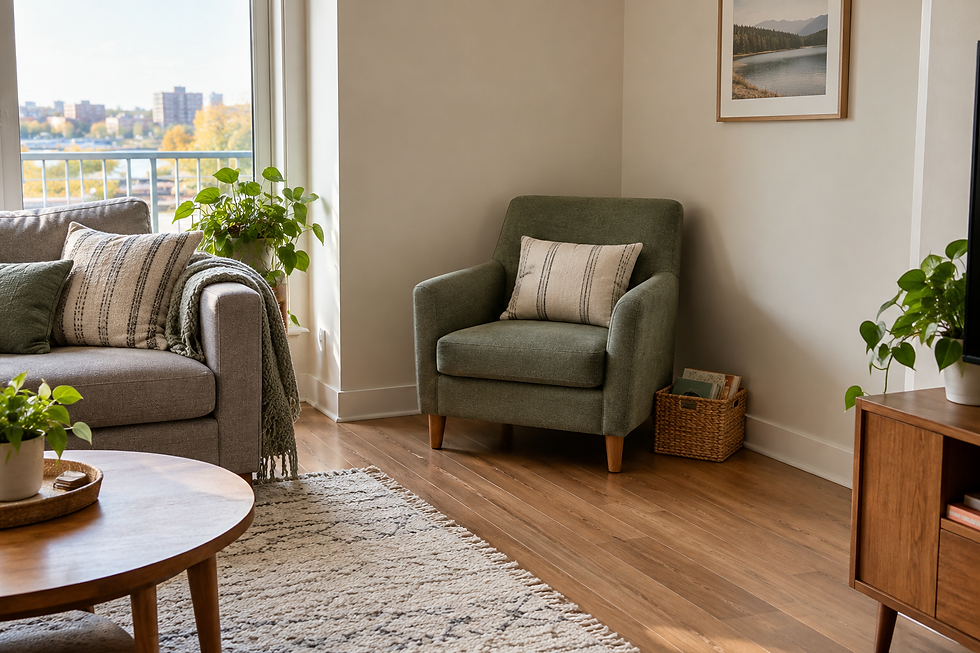
Walk through your home at the time the corner is likely to be used. A peaceful location on Saturday morning may sit beside the busiest route during dinner preparation. Evaluate the room as it functions, not as it appears in an empty photograph.
Look for less household traffic
Avoid areas people continually cross to reach the kitchen, bathroom, or entrance. Shoes, school bags, and passing conversations can make an unused corner surprisingly busy. Try the quieter edge of an existing room first. Moving a chair may be more practical than reorganizing the entire home.
Check where doors swing and where cupboards open. A setup that obstructs a storage unit will be moved constantly. Allow space for the everyday movements of adults and children, including anyone who uses a mobility aid. Do not trade a clear walking route for a pleasing layout.
Plan where you will be
Ask where the supervising adult will sit or stand. If your child needs you nearby, choose a location that makes that possible. An isolated room is not a better choice simply because it is quieter. You may need to pause another task and accompany your child.
A calm corner does not make cooking, working, or leaving the room automatically compatible with supervision. Decide what is practical before you rely on it during a busy part of the day. If two adults share care, discuss who is responsible rather than assuming the other person is watching.
Check the physical setting
Look from your child's height. Review access to windows, blind cords, cables, heaters, unstable furniture, small objects, and anything obstructing entry or exit. Follow the instructions for furniture and any product you use, including placement and clearance requirements.
An awkward location does not become appropriate because it is the only unused area. You can choose a different seat or a temporary arrangement. Keep household exits clear, and make sure storage does not become a climbing opportunity.
Test it temporarily
Before committing to a purchase, try the location with an existing suitable seat and one familiar book. Sit together briefly. The test concerns the setup, not whether your child can “calm down.” Can you supervise? Does the screen dominate the view? Is the seat directly beneath an uncomfortable light? Does someone need to pass through constantly?
Change the location if those details do not work. This simple trial can prevent spending money on a product that cannot solve the actual layout problem.
Make the space less busy
Once you have a location, consider what your child sees and hears from there. You do not need silence or a room decorated in one colour. Make a few deliberate adjustments and check whether they are useful.
Reduce one source of visual clutter
Start with the objects nearest the seat. A crowded shelf, overflowing basket, or nearby screen may make the corner feel as busy as the rest of the room. Move one distracting collection or orient the seat toward a simpler view.
Your home can remain personal. Family photographs and favourite colours do not need to disappear. Avoid redesigning the room based on a supposed universal “calming colour.” Ask what your child likes and consider how the particular space feels to them.
Check lighting from the seat
A lamp may shine directly into your child's eyes even if it looks pleasant from across the room. Daylight can be strong at certain times. Another child may dislike a dim area and want it brighter. Choose ordinary suitable lighting and adjust it to the setting.
Keep cords inaccessible and do not add electrical accessories just because an online photograph includes them. If the existing room light works, you do not need a special lighting system. A simpler view and a different seat position may be enough.
Notice sound realistically
You might turn down the television, close a nearby door, or move noisy play to another suitable area. In some homes, appliances, neighbours, and family activities will remain audible. The corner can still provide an option without being silent.
Do not describe a tent, screen, or soft furnishing as soundproof unless the manufacturer documents that property. If sound remains the main difficulty, changing the location may be more useful than adding decorations.
Keep it maintainable
Choose changes the household can sustain. If using the corner requires moving several pieces of furniture every time, it may stop being available. A modest arrangement with a clear routine is a reasonable choice even when it does not resemble a professionally styled room.
Choose a few useful items

Start with fewer things than you think you need. A collection of gadgets, activities, and instructions can create more choices and turn the area into another play station. Select items according to your child's interests, age, and applicable safety guidance.
Suitable seating
Use an existing chair or another age-appropriate option if it works. Check comfort, stability, access, and the surrounding route. If your child has positioning or mobility needs, follow the individual advice you have received. Do not improvise specialist equipment from an online image.
One familiar activity
A favourite book is a reasonable starting point. Another child might prefer looking at a few familiar pictures or sitting without an activity. The area does not have to keep them occupied every moment.
Choose something easy to put away. If an object repeatedly becomes the source of conflict, reconsider whether it belongs there. You can rotate one item occasionally without offering an entire toy cupboard.
Small accessible storage
A simple container can help keep the area usable. Give it a limited purpose: perhaps two books and one appropriate familiar object. Avoid allowing every displaced toy to arrive there.
Check the storage as younger siblings develop new abilities. An item suitable for one child may be inappropriate within reach of another. Keeping the corner simple also makes cleaning and inspection easier.
Communication materials when relevant
Make familiar communication supports available if your child uses them. A way to ask for help or leave may be more useful than a wall chart naming twenty emotions. Introduce anything new through the methods your child already understands, with individual guidance where needed.
Accessories are optional
Weighted products, chewable items, headphones, and sensory equipment have different instructions and suitability considerations. They are not essential to every calm corner. Check age guidance and intended use before adding them, and seek individual advice when appropriate. Avoid buying a collection simply because a marketing photograph presents it as a complete solution.
Introduce the space without pressure

Choose an ordinary moment when you and your child can explore. Introducing a new setup during a difficult situation may add instructions when your child already has enough happening. Explain the purpose briefly and spend a little time there together.
“This is our quieter spot. We can come here when we want a pause. I can sit beside you.” Show where to sit and how to leave. If you use a product, demonstrate it according to its guide.
Keep it familiar through ordinary use
The corner can be somewhere to read or spend a brief quiet moment together. It does not need to appear only after an argument. You might model an ordinary pause: “I'm going to sit here for a moment before we start the next thing.” Keep the demonstration honest rather than promising that the corner removes every frustration.
Explain access clearly
Your child should know how to request the area and whether you need to accompany them. A phrase, gesture, or familiar picture may work. Explain the same arrangement to other caregivers so your child encounters a consistent purpose rather than changing rules.
Do not turn the introduction into a lesson about every possible feeling. Begin with what the child needs to know to use the area. Additional conversations can happen naturally over time.
Let participation be reversible
Offer small choices that can change. “Let's try the book basket here; we can move it if it gets in the way” leaves room to learn. If your child wants to leave after a brief look, end the introduction and return another day. There is no required practice duration.
Support the pause and the next activity

An invitation can be simple: “Would you like somewhere quieter? I can come with you.” If your child declines, offer another appropriate option or remain together where you are. Avoid making the corner itself a new point of conflict.
Say less when less is useful
Your child may not want to explain everything immediately. Questions about what happened, how they feel, and what they should do next can wait when no urgent answer is needed. “That was a lot. I'm here” makes your availability clear without demanding a detailed account.
Keep ordinary boundaries
Preferences can guide where you sit and whether you bring an activity. Necessary limits still apply: a pause does not make hurting someone acceptable. Respond appropriately to the immediate situation and your child's needs rather than relying on the area as a response to every unsafe action.
The space should not be used for forced isolation. Do not require an apology, a smile, or a statement that your child is calm before they can leave. If you use a product, preserve the free access specified in its instructions.
Make the next step manageable
When your child is ready to move on, describe what happens next. “We're going to the kitchen” is clearer than several simultaneous instructions. You might offer help putting away the book or accompany them to the next activity.
If a timer helps your child anticipate an ordinary transition, agree on its use in advance. Do not make it a deadline for changing feelings. A brief conversation about an earlier problem can happen later when both of you are available to discuss it.
Three realistic home layouts
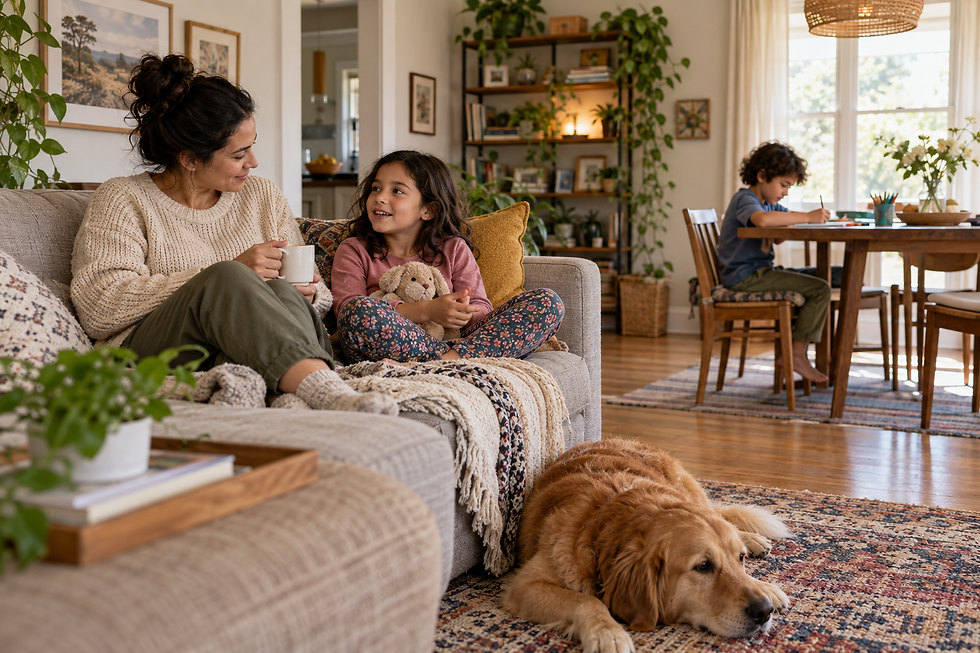
These are hypothetical examples to help you plan, not customer testimonials or claims about outcomes.
The apartment living room
Imagine a family whose living room also contains the dining table. The apparent spare corner sits beside the route to the kitchen. Instead of blocking that route, they try an existing chair at the quieter end of the sofa. Two books fit in a small container beside it, and a parent can sit nearby.
Their first adjustment is turning down the television during a pause. They do not buy a room divider or promise silence. After trying the arrangement, they move the container because a younger sibling keeps emptying it. The useful change is practical access, not a dramatic room transformation.
The multipurpose room
Another household uses one room for remote work and evening family activities. A permanent floor setup would obstruct a desk. They consider a temporary arrangement, but first measure the available area and decide when an adult can be present.
A portable option only makes sense if there is suitable space while it is in use. They plan where it will be stored and who will prepare it. If setting it up becomes inconvenient, an ordinary chair remains available as another pause option.
The shared bedroom
Two siblings share a room. A quiet area beside one bed seems convenient, but the other child needs access to nearby belongings. The parents try an agreement about giving each other space, then realize the arrangement causes repeated interruptions.
They move the pause option into a family area instead. This preserves access to both children's possessions. A location can be changed without treating anyone as responsible for the first plan failing.
Decide whether a portable sensory tent fits
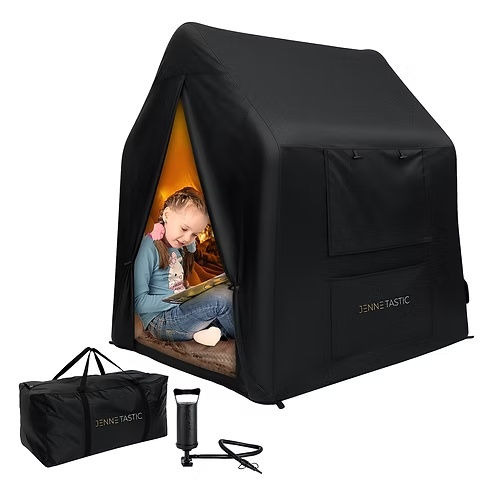
Some families want a more defined temporary indoor area without making a permanent change. JenneTastic's portable format may be relevant when a room serves several purposes or a setup needs to be stored between uses. Review the information for parents and families to compare that format with your circumstances.
Before choosing, measure the usable floor area, review supervision requirements, and consider your child's preferences. A child who wants an open view may prefer an ordinary seat. A portable product should solve a practical problem rather than become a purchase every family supposedly needs.
JenneDesign's FAQ specifies supervised indoor use for children aged three and older. JenneTastic is a temporary calm space, not a sleeping area or a place for active play. Its entrance must remain clear, and it must never be used for confinement. The adult operates the pump and remains responsible throughout use. Follow the current English FAQ and user guide for placement, operation, inspection, care, and storage.
The product does not replace individualized support or guarantee a particular response. Introduce it gradually and respect the child's reaction. Keep another suitable option available. Consult the JenneTastic product information when comparing features, rather than assuming it shares the properties of another tent.
Try a simple first week
Treat the first week as a practical trial rather than a programme your child must complete. The sequence below is optional; move more slowly if that fits your household.
Days one and two
Observe the proposed location during a busy part of the day. Notice traffic, lighting, sound, and where the adult can be. Address access problems before setting anything out. Then choose suitable seating and one familiar item, using what you already own where possible.
Days three and four
Introduce the area briefly during an ordinary moment. Explain its purpose, show how to leave, and offer one small choice. Later, ask a specific comfort question such as “Would you like this book here or beside the chair?” Change one detail rather than replacing the setup immediately.
Days five and six
Offer an everyday invitation when a pause fits naturally. Your child may accept or decline. Explain the arrangement to another caregiver, including what happens if the child prefers another place. Share the actual supervision plan rather than assuming a label on the area explains everything.
Day seven
Review the practical details. Is the space available when planned? Can you supervise comfortably? Is storage manageable? Keep useful elements and adjust inconvenient ones. You do not need a chart measuring every visit or a claim that the corner has changed your child's behaviour.
Troubleshoot before adding more products
Your child does not want to use it
Check the location, seating, and invitation. Is it too isolated? Does it feel like being sent away? Is the child simply more comfortable beside you elsewhere? Offer an alternative. Refusal is not evidence that you need a more expensive setup.
It turns into an active play area
Review the contents. A large toy collection can make the purpose unclear. Reduce the materials and explain where active play belongs. Keep the conversation neutral: you are clarifying how the household uses a space, not criticizing a child for enjoying objects you supplied.
Siblings compete for access
Prepare another simple pause option rather than crowding the same area. Follow occupancy guidance for any product. Help each child understand that wanting company and wanting privacy are preferences an adult can help manage. A sibling should not become responsible for supervising another child.
The arrangement creates more work
Simplify storage or choose a different location. If you repeatedly need to clear furniture or search for materials, the setup may be too complicated. Remove unused items and retain a basic option that can remain available.
You cannot tell what is helping
Record a few practical observations if useful: whether your child chooses the area, which seat they prefer, and whether interruptions are common. Avoid treating these notes as proof of a medical or developmental effect. Change one factor at a time so you can understand the layout more clearly.
Frequently asked questions
Does every child need a calm corner?
No. It is one possible household arrangement. Some children prefer a quieter seat near a parent. Focus on suitable options rather than completing a parenting checklist.
Does it need to be dark?
No. Choose lighting your child finds comfortable and keep it appropriate for supervision. There is no need to assume that darker is always better.
How long should a child stay?
There is no universal duration for an everyday pause. Consider the situation, your child's needs, and any product instructions. Avoid requiring a particular emotional state before they leave.
Can children use it before they are upset?
Yes. Ordinary reading or quieter time together can help explain the purpose without waiting for a difficult event. Introduce it when both of you are available.
What if my home is very small?
Start with a suitable existing seat. Consider adjusting its position or reducing one nearby distraction. A separate room and specialist equipment are not prerequisites.
What if my child needs individual support?
Use the advice of professionals familiar with your child's circumstances. A home setup can fit everyday routines, but an article or product cannot replace an individual assessment or support plan.
Your home setup checklist
Before introducing the space, confirm that the location allows appropriate adult supervision and that exits and walking routes remain clear. Address nearby hazards, choose suitable materials, and follow any product instructions. Make sure your child can request help, decline the space, and leave in a familiar way.
Explain the purpose to other caregivers. Keep an alternative available and check that the arrangement is simple enough to maintain. Revisit the layout when furniture moves, routines change, or younger siblings gain access to new objects.
Begin with one suitable place and one ordinary moment together. If a defined portable area would solve a practical space problem, compare its instructions and features with your home. If your child already has a comfortable place beside you, you can begin there. The aim is to make a supported pause easier to offer within family life.
Ready to explore JenneTastic for your home?
Visit the ordering page to review the JenneTastic kit, current price, and purchase options. Select the image below to get started.

Comments